Beyond the Blueprint: Driving Architectural Innovation at Peddle Thorp Architects
At Peddle Thorp Architects, we blend human creativity with advanced technology. Discover how we utilise Virtual Reality, 3D modelling and custom AI workflows to create immersive experiences, streamline documentation and expand our design capabilities while maintaining strict architectural oversight.
.jpg)
Architecture has always been a balance of art and science, and the tools we use to navigate that balance are evolving faster than ever. At Peddle Thorp Architects, we are actively integrating Virtual Reality (VR), advanced 3D modelling and Artificial Intelligence (AI) to fundamentally improve how we design, collaborate and deliver projects. By embedding these tools into our daily workflows, we can test ideas earlier, solve complex geometric challenges and bring our clients directly into the spaces we are creating long before a single brick is laid.
.jpg)
Immersive Realities: Experiencing Spaces Before Construction
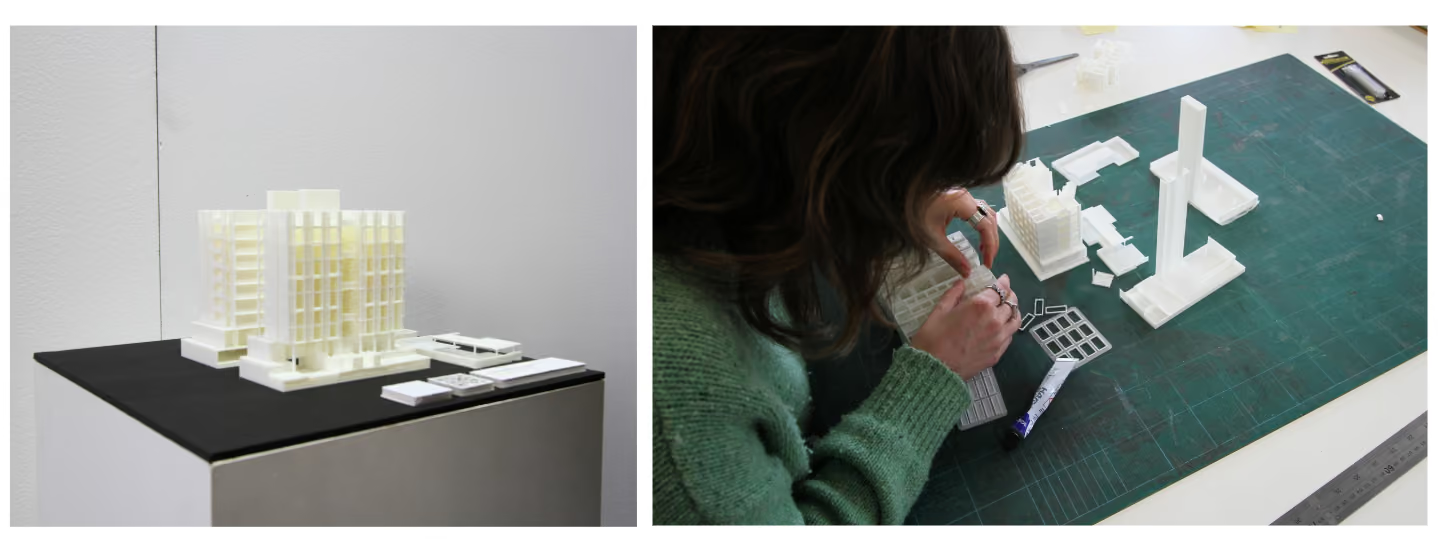
Virtual Reality has transformed how we engage with clients, stakeholders and end user groups, particularly in our Health Care and Sports and Recreation projects. Rather than relying solely on 2D plans, VR allows people to step inside our concepts and experience spatial scale, materials and finishes in real time.
During the design of the Cabrini Hospital with our sister company HSPC Health Architects, we used VR alongside Nurse Unit Managers and staff to walk through clinical spaces. This allowed them to physically understand recovery area flows and bedroom layouts, providing invaluable feedback that refined the design. Similarly, for the Ivanhoe Grammar School Coonawarra Willam Aquatic Centre, we immersed clients and students in VR to evaluate exterior facades and pool hall atmospheres during the initial town planning and concept phases. This ensured the final design truly resonated with the people who will use it every day.
"Exploring and testing advancing technologies and programs is paramount to our daily workflows, enabling us to drive efficiencies in design, documentation and project delivery within the rapidly evolving fields of AI, computational design and data-driven design systems" - George Avraam, Architectural Graduate
Bridging Concept and Construction with Advanced Modelling
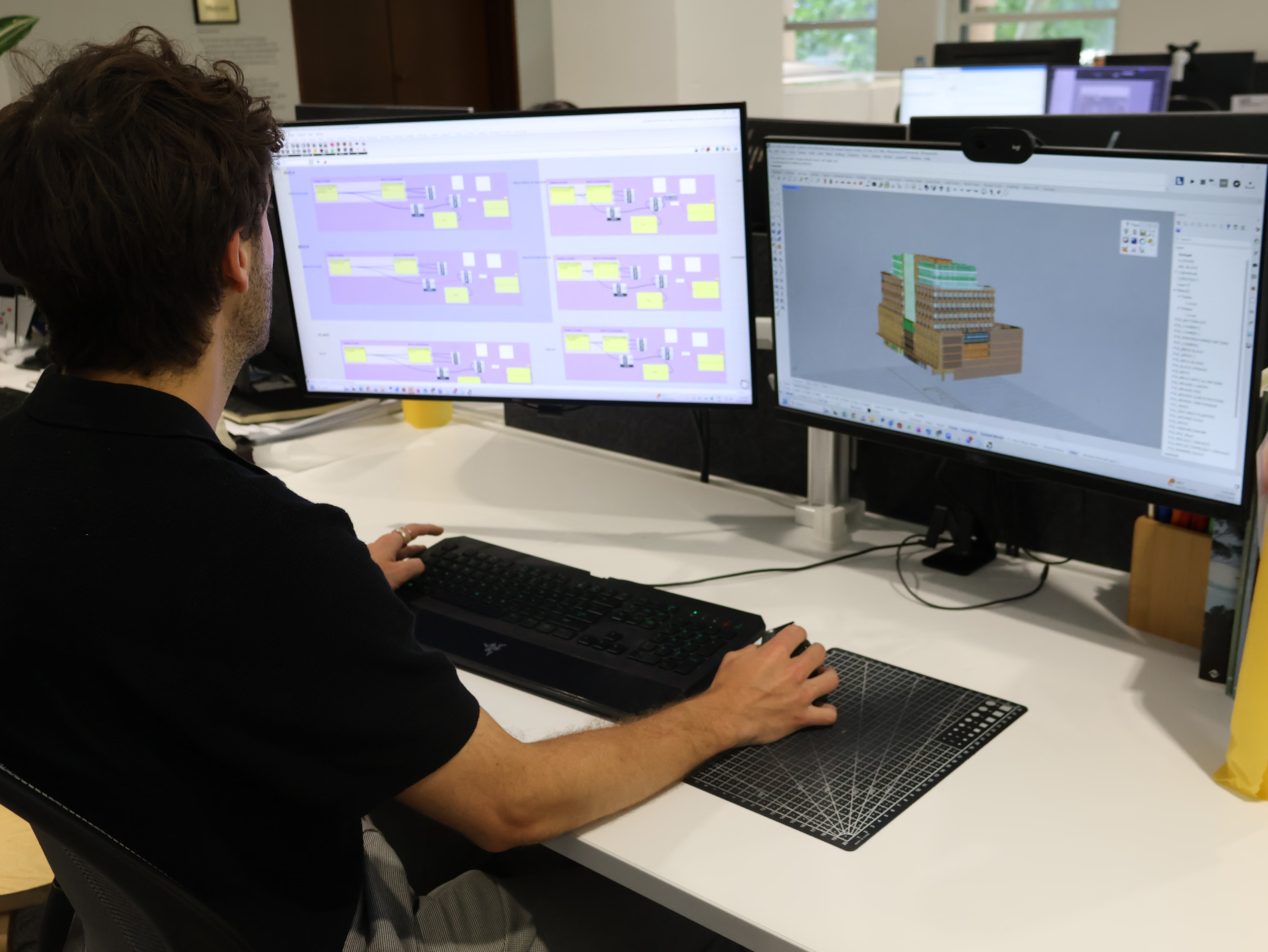
Translating fluid concepts into buildable construction documentation requires precise technological tools. We utilise programs like Rhino Inside Revit and MKS Beam to bridge this gap, ensuring that conceptual models are accurately ported into our Revit environments for Design Development and construction phases.
This workflow has been instrumental in iterating facade designs across our major projects, such as our work at Melbourne Airport. By leveraging these tools, our team was able to translate highly complex geometries, bespoke joinery and interactive design elements into highly accurate, buildable models. Furthermore, we are testing the integration of AI programs with Geographic Information Systems (GIS) to automate site and context modelling. This allows us to rapidly extract data on built forms, terrains, roads and vegetation to ground our designs in their exact physical context.
AI Assisted Exploration and Seamless Visualisation
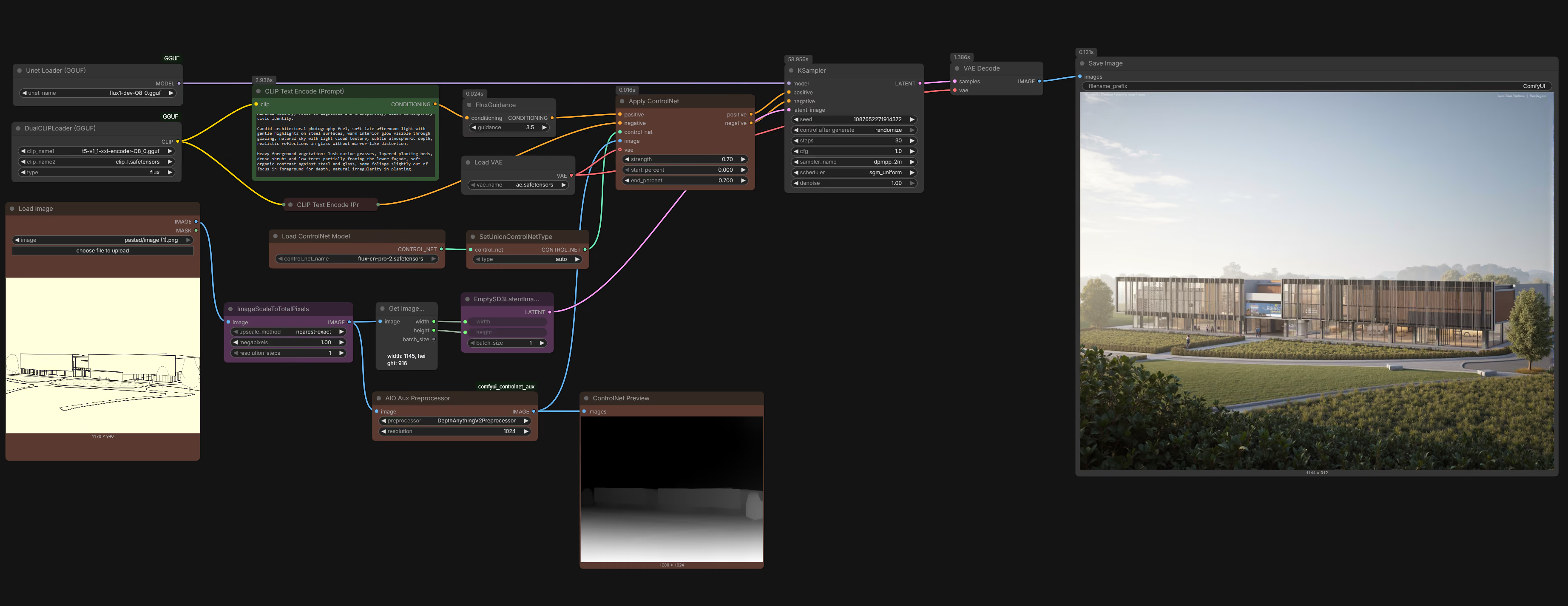
We are moving beyond standard AI novelties by developing custom workflows using ComfyUI. This visual programming interface allows us to build structured generation pipelines using advanced imaging models like Flux and Z-Image to rapidly produce detailed architectural concepts. Crucially, by integrating ControlNets, we anchor AI generated images directly to our own hand sketches and 3D models. This ensures the outputs remain strictly tied to our design intent, rather than producing generic imagery, allowing for rapid but highly controlled iteration.
In parallel, our detailed BIM models in Revit integrate directly with Enscape and Veras. Because these visualisation tools are embedded within our modelling environment, we can test subtle changes in lighting, materiality and atmosphere in real time. This dramatically shortens the feedback loop between modelling and rendering, informing design decisions much earlier in the process.
"AI is most valuable when it’s led by intention. Our tools support exploration, but the decisions remain human" - Alex Davies, Project Architect
Custom Tools and Architectural Oversight
To further streamline our workflows, we are utilising AI assisted coding, sometimes known as vibe coding, to prototype task specific digital tools. By writing custom scripts and plugins for Revit, we can automate repetitive documentation processes and accelerate technical drawing preparation without waiting for formal software updates. Because these tools are developed internally, they evolve directly alongside our projects.
Ultimately, none of this technology produces architecture on its own. Our process maintains strict architectural control, strategy and oversight. We define the parameters, curate the results and refine the inputs to produce highly considered design solutions. AI simply helps us explore more options and evaluate different materials early in the process, ensuring we stay within budget and programme constraints. It does not replace our professional judgement. At Peddle Thorp Architects, technology remains a practical tool to help us deliver the best possible outcomes for our clients and the communities they serve.