Designing the Future of Community-Focused Social Housing
Peddle Thorp Architects advances community-focused social-housing renewal through research, adaptive design, and collaborations that improve wellbeing, retain residents, and shape sustainable future neighbourhoods.
At Peddle Thorp Architects, we are continually exploring how thoughtful design can strengthen communities and support the future of social housing in Victoria. As part of this work, our Lead of Social Housing Innovation, George Avraam, brings forward research, advocacy and on-the-ground engagement that enrich the way we approach housing projects across the practice.
Reimagining Public Housing
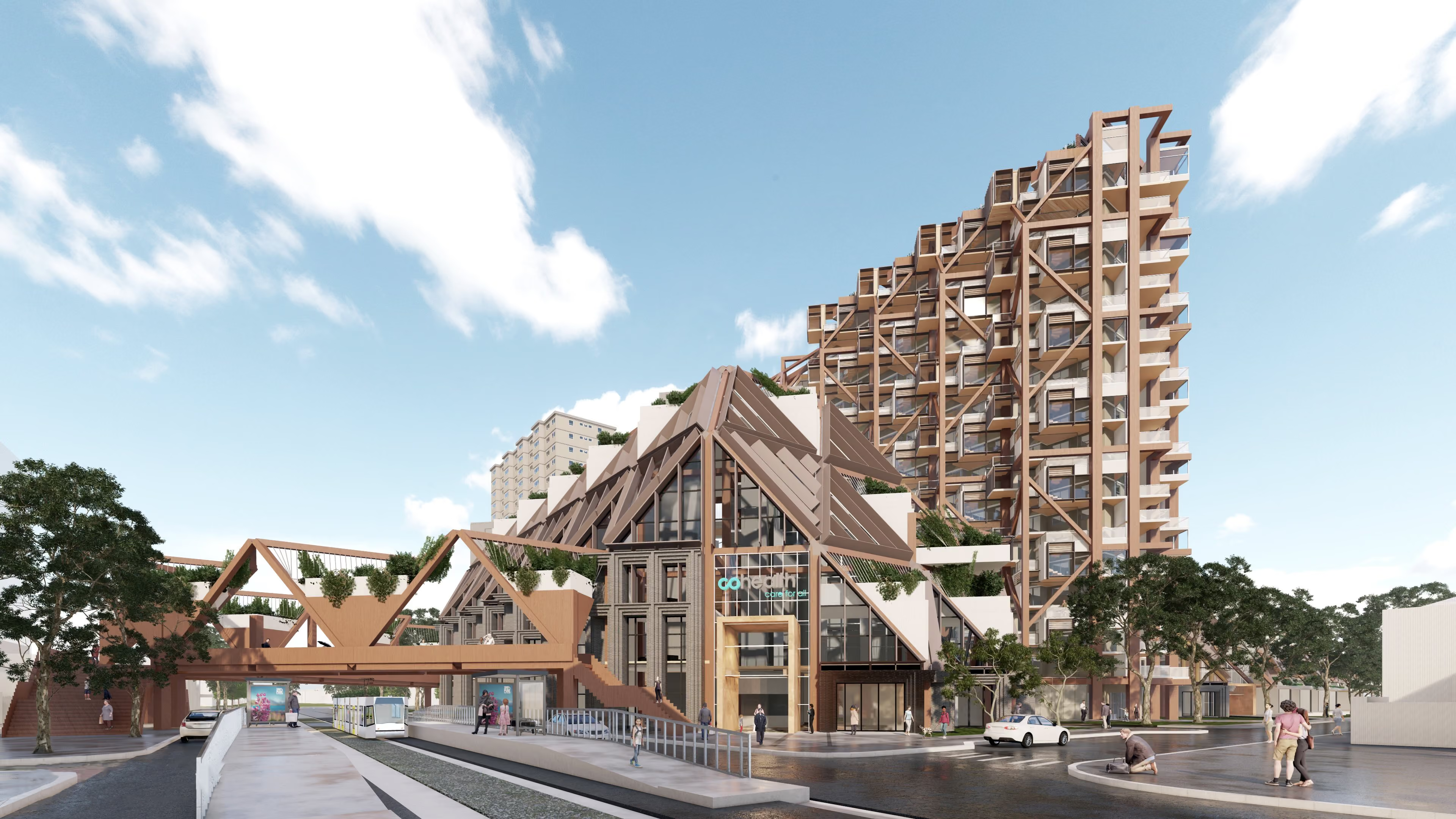
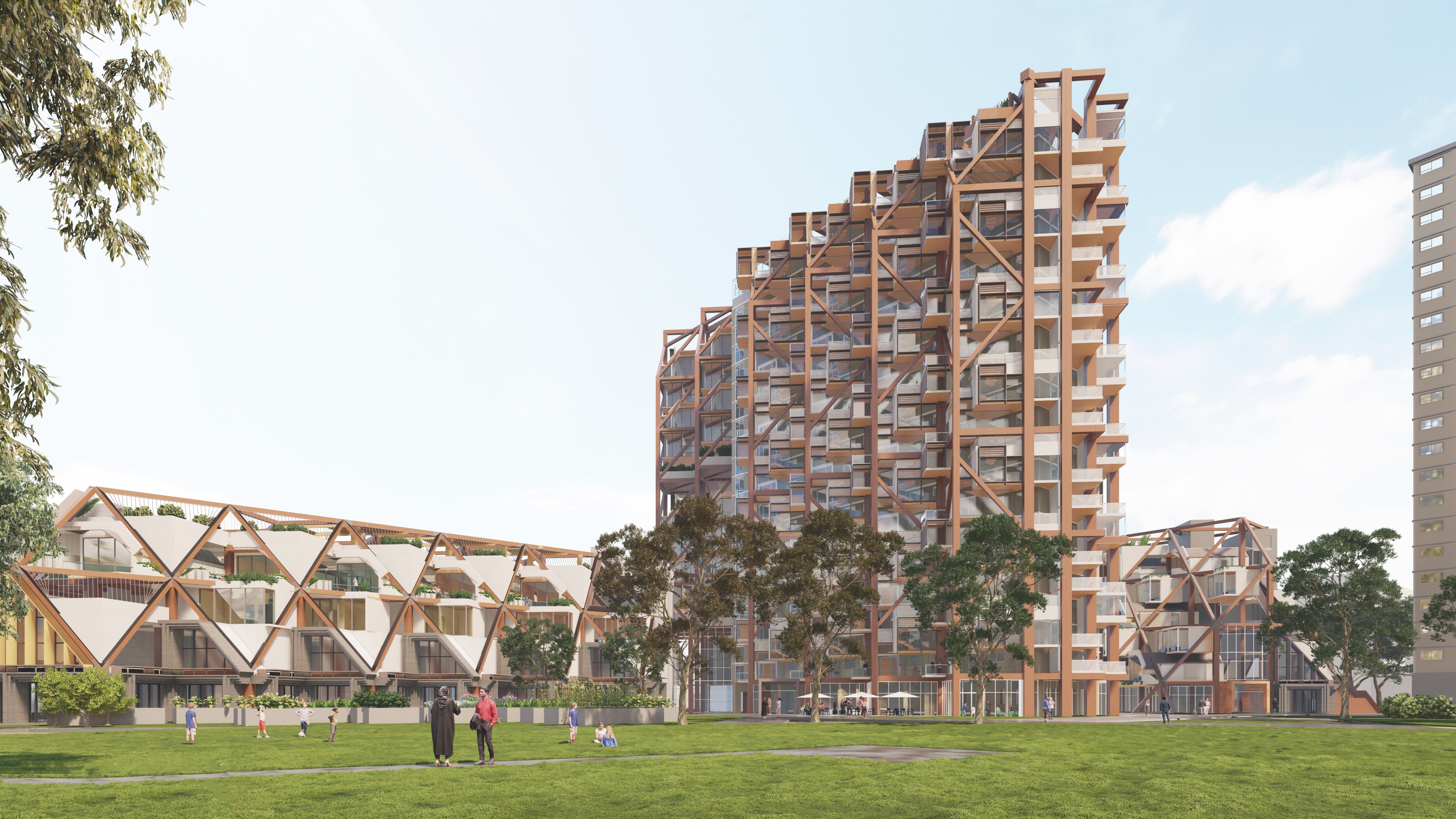
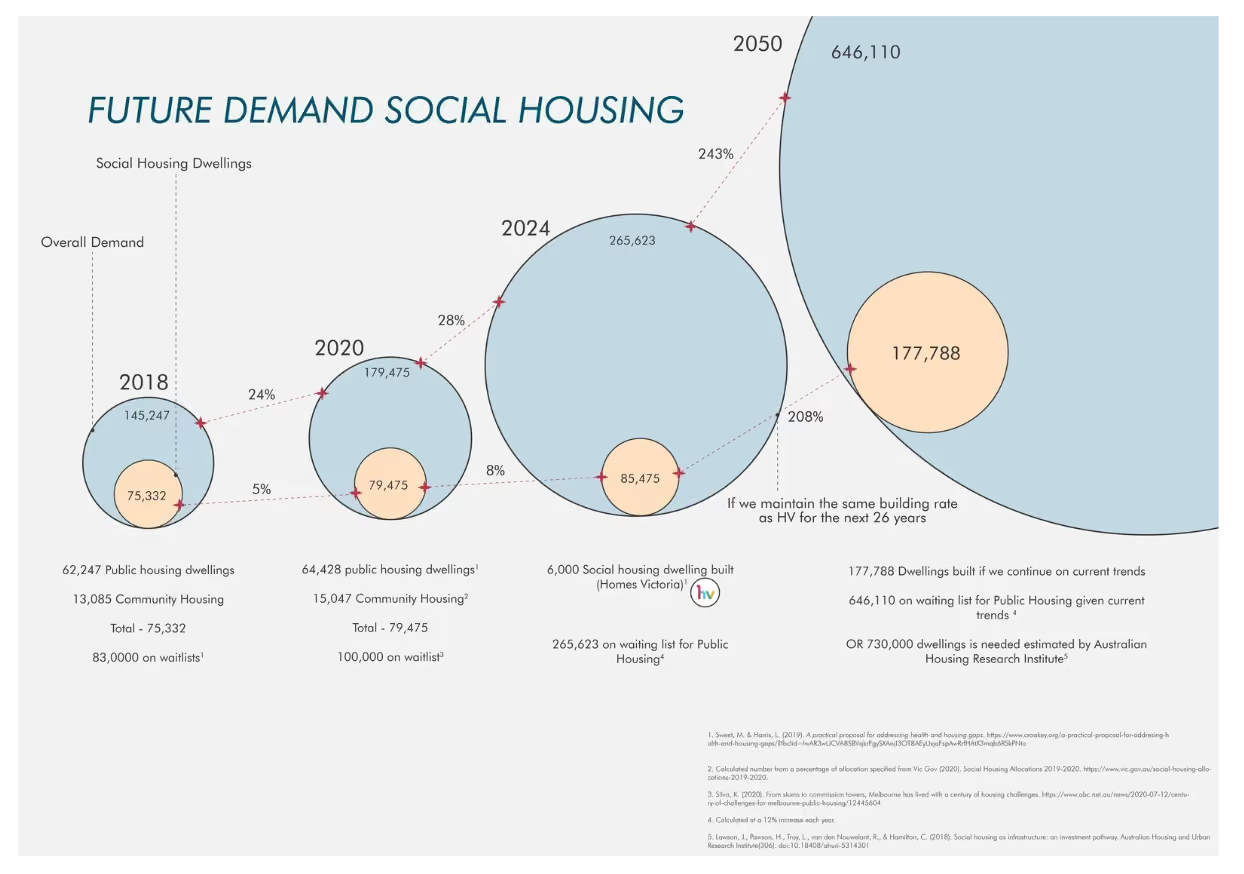
A key part of this work draws from George’s research project, The Hoddle Street Neighbourhood Home, which examines how Melbourne’s social-housing towers can transition without displacing the communities that rely on them. Rather than approaching renewal through demolition, the study explored how adaptation can deliver meaningful improvements while protecting community stability.
The project investigated how the towers could be reconfigured over time, allowing residents to remain on-site while new homes, services and shared spaces are introduced. Through collaboration with Unison Housing and CoHealth, the research tested a precinct model that situates new social-housing apartments alongside community facilities and integrated healthcare services. This approach recognises that housing, wellbeing and social connection are interdependent, and that successful renewal must support all three.
Design strategies such as winter gardens, improved outdoor spaces and layered communal areas were developed to lift indoor environmental quality, promote natural light and ventilation, and create opportunities for everyday social interaction. These structured interventions aim to transform the living experience without erasing the physical or social fabric that already exists.
The project received a Commendation from the Australian Institute of Architects Victorian Chapter Graduate Prize and was later featured in The Age, where it contributed to the broader conversation on the future of Melbourne’s social-housing towers and alternatives to demolition-led renewal.
%20(4).gif)
Contributing to Public and Industry Dialogue
The Hoddle Street research has helped inform wider discussions about how public-housing towers can be renewed in ways that preserve community life and reduce environmental impact. This thinking was further showcased in the Public Housing Tower Reimagined exhibition for Melbourne Design Week, delivered in collaboration with the Victorian Sustainable Architecture Committee. The exhibition highlighted retrofit and renewal strategies across all forty-four public-housing tower sites in Melbourne, building awareness of the opportunities inherent in retaining and reworking existing structures.
Public engagement has also been an important part of the conversation. Through interviews on 3CR Radio’s Climate Action Show, topics such as embodied carbon, retrofit potential and long-term sustainability have helped shape broader understanding of how renewal strategies can balance social, environmental and economic considerations.
%20(6).avif)
Informing Our Practice
Insights from the Hoddle Street Neighbourhood Home and related research continue to enrich our approach to housing and community projects within Peddle Thorp Architects. The work reinforces the importance of design that protects communities, adapts existing assets and supports resilient futures, and it plays a meaningful role in how we consider opportunities for social-housing renewal across the practice.
%20(5).gif)
Looking Ahead
As we continue to engage with the future of social housing in Victoria, our focus remains on renewal strategies that prioritise people, strengthen community connection and deliver genuine long-term value. We are committed to advancing design approaches that respond to the realities of existing public-housing assets, while supporting more resilient, inclusive and sustainable neighbourhoods. Through ongoing research, collaboration and project work, we will continue contributing to conversations and solutions that shape a more equitable social-housing future for communities across the state.